First Moves
Start Here
What A Credit Denial Actually Means
A denial does not always mean permanent rejection or “bad credit.” Lenders may review many factors beyond a score alone, including recent activity, debt levels, income consistency, identity verification, business information, and profile stability.
Consumer Rights
Your Rights Under Federal Law
Under the Equal Credit Opportunity Act and Regulation B, creditors generally must give specific reasons when credit is denied or provide notice of your right to receive those reasons.
Adverse Action Notices
Lenders are generally expected to provide specific reasons instead of vague explanations.
Reporting Disputes
You may dispute inaccurate, incomplete, or outdated information on credit reports.
Timing Matters
Profiles can change as balances update, inquiries age, and reporting cycles refresh.
Lender View
Common Reasons Applications Get Denied
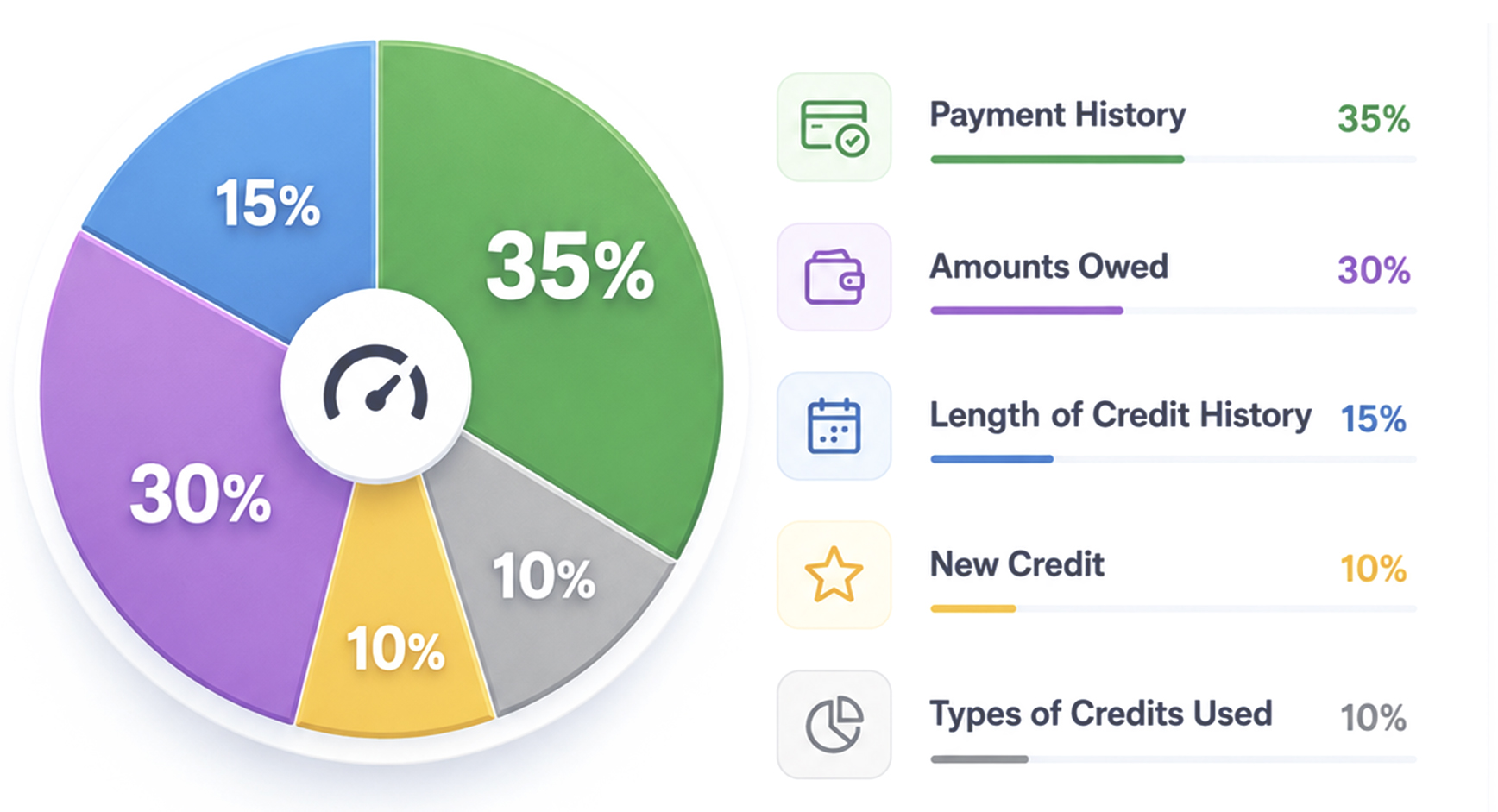
Denials often connect to risk signals lenders see in the profile. The key is knowing which issue to address first.
High Utilization
Using too much available revolving credit may increase perceived risk.
Recent Inquiries
Multiple hard inquiries may signal increased borrowing activity.
Limited History
Thin files may give lenders less history to evaluate.
Negative Reporting
Collections, charge-offs, or late payments may affect approval odds.
Verification Concerns
Some lenders need stronger income or identity documentation.
Avoid Extra Damage
Mistakes People Sometimes Make After A Denial
Consumers sometimes make their profiles harder to stabilize by reacting too quickly after a denial.
!Reapplying Too Quickly
More applications may increase inquiries without improving approval odds.
!Closing Older Accounts
Closing aged accounts may reduce profile strength in some situations.
!Filing Inaccurate Disputes
Incorrect disputes may create unnecessary complications.
!Following Random Hacks
Viral shortcuts may not match lender standards or reporting systems.
Strategy Before Action
Strategic Recovery & Readiness
Improving lender-readiness is usually less about rushing applications and more about understanding reporting, timing, utilization, profile stability, and financial patterns.
A structured review may identify
- Reporting concerns
- Utilization issues
- Timing considerations
- Inquiry management opportunities
- Lender-readiness factors
Next Move
When Reapplying May Make More Sense
In some situations, waiting for balances to update, inquiries to age, or reporting corrections to process may improve future application outcomes.
What may help before reapplying
- Updated utilization reporting
- Improved payment consistency
- Reduced inquiry activity
- Corrected reporting errors
- Stronger profile stability
Before applying again, understand what lenders may be seeing.
Sometimes the issue is not only your score — it may be the timing, reporting structure, utilization patterns, profile stability, or lender-readiness factors connected to your application.
Sources & Educational References
- CFPB Regulation B — Notifications
- CFPB — Credit application denied
- FTC — Adverse action notices
- Experian — Loan denial guidance
- myFICO — Credit score factors
Educational information only. Meta Fiscal does not guarantee approvals, score increases, credit outcomes, funding, or specific lending terms. Lender requirements vary by institution, product, income, debt, credit history, and other factors.