How Credit Scores Are Calculated — Meta Fiscal
Credit Education

How Credit Scores Are Calculated

Learn the main factors that may affect your credit score and how lenders may evaluate different areas of your credit profile.

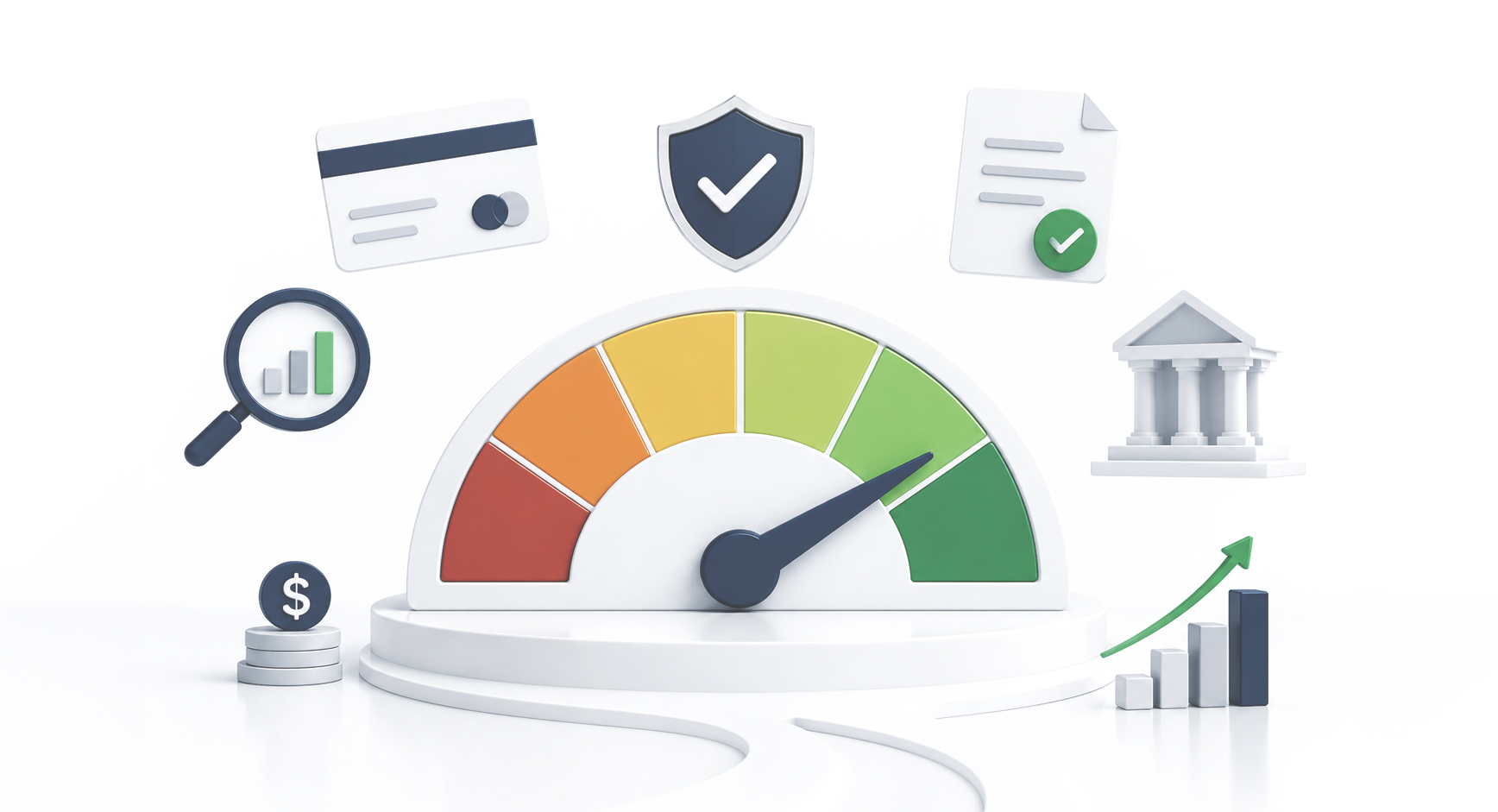
Credit score factors illustration
Your score is usually built from multiple categories working together.

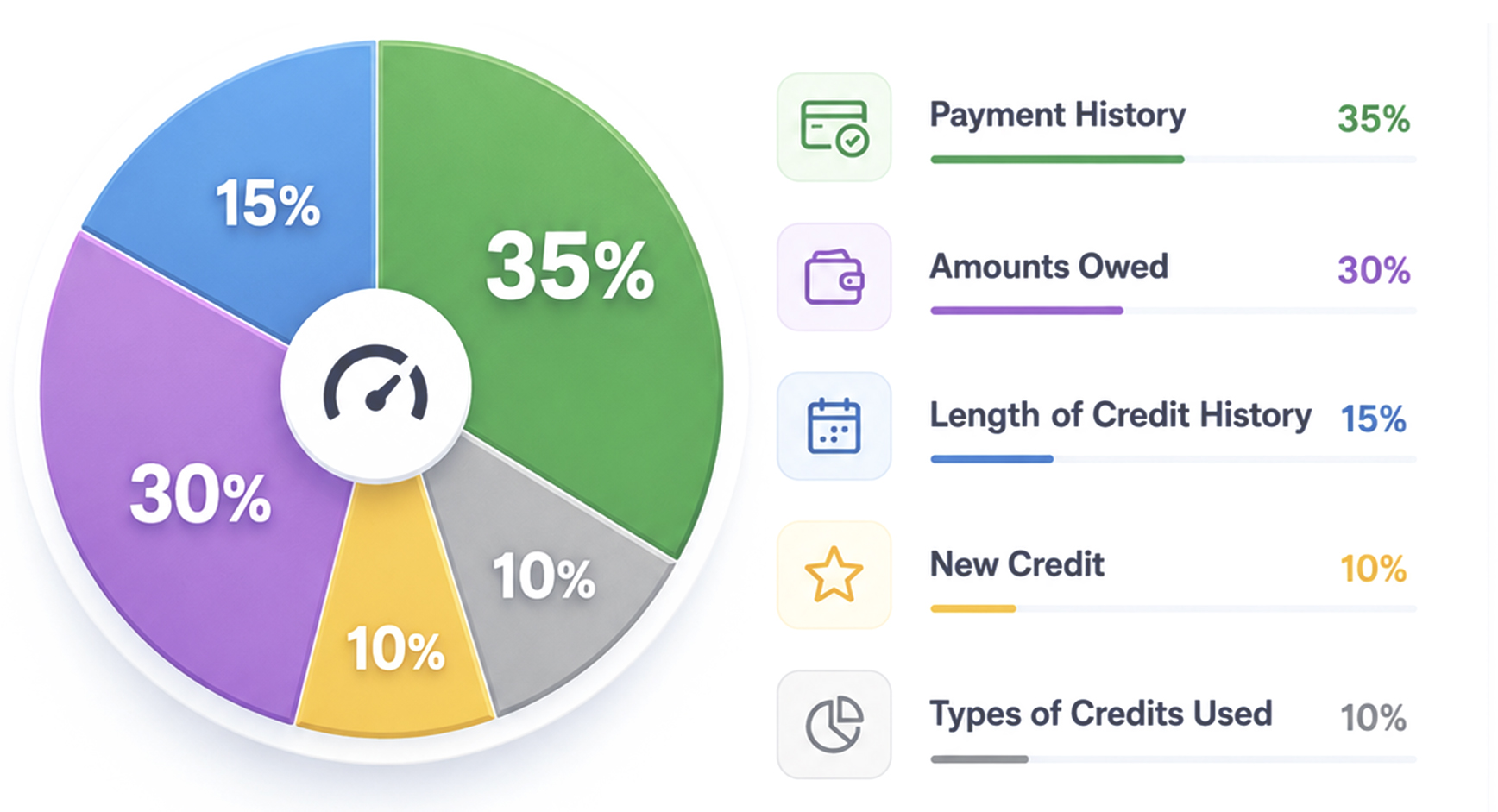
Some factors may affect your score more heavily than others. Understanding the weight of each category may help you make smarter financial decisions over time.

35% Payment History
On-Time Payments
Largest Factor

Largest Factor

Payment History

Your payment history is usually one of the most important parts of your credit profile. Late payments, charge-offs, collections, and missed accounts may negatively affect your score.

What lenders may look for: Consistent on-time payments and signs of financial stability over time.

What May Help

  • Pay all current accounts on time
  • Address inaccurate negative reporting
  • Avoid falling behind on active accounts
  • Create consistent payment habits
30% Debt Ratio
Credit Usage
Balances Matter

Second Largest Factor

Debt Ratio

This area usually looks at how much of your available credit is currently being used. Higher balances compared to your limits may increase risk in the eyes of lenders.

What lenders may look for: Responsible use of available credit without relying too heavily on revolving balances.

What May Help

  • Lower credit card balances gradually
  • Avoid maxing out accounts
  • Spread balances responsibly
  • Keep older accounts open when possible
15% Credit History
Account Age
Long-Term Trust

Established History

Length of Credit History

Older accounts may help show lenders that you have experience managing credit over time. Newer credit files may sometimes appear less predictable.

What lenders may look for: Long-standing accounts with positive payment patterns and account stability.

What May Help

  • Maintain older positive accounts
  • Avoid unnecessary account closures
  • Build stable long-term habits
  • Be patient with newer profiles
10% Credit Types
Mix of Accounts
Revolving + Installment

Credit Variety

Types of Credit

Some scoring systems may consider the variety of credit accounts on your profile. This may include revolving accounts, installment loans, and other types of credit.

What lenders may look for: Responsible management across different types of financial obligations.

What May Help

  • Manage all account types responsibly
  • Avoid opening accounts without purpose
  • Focus on stability over quantity
  • Build gradually over time
10% Inquiries
New Applications
Hard Pulls

Recent Activity

Number of Credit Inquiries

Applying for multiple accounts in a short period of time may signal higher risk to lenders. Too many hard inquiries may sometimes lower your score temporarily.

What lenders may look for: Signs that you are not aggressively seeking new debt or financial relief.

What May Help

  • Avoid unnecessary applications
  • Space out new credit requests
  • Focus on rebuilding first
  • Review offers carefully before applying

Understand what may be affecting your score.

Meta Fiscal helps you better understand your financial position, identify possible problem areas, and build a practical strategy toward stronger financial readiness.

Sources referenced: myFICO®, Experian®, Equifax®, and TransUnion®. Educational information only. This page does not guarantee score increases, approvals, or funding outcomes. Different lenders and scoring models may evaluate profiles differently.
Meta Fiscal

Financial readiness, education, and guidance designed to help you move with more clarity and confidence.

Redirecting mobile users…

If you are on mobile and not redirected, click here.